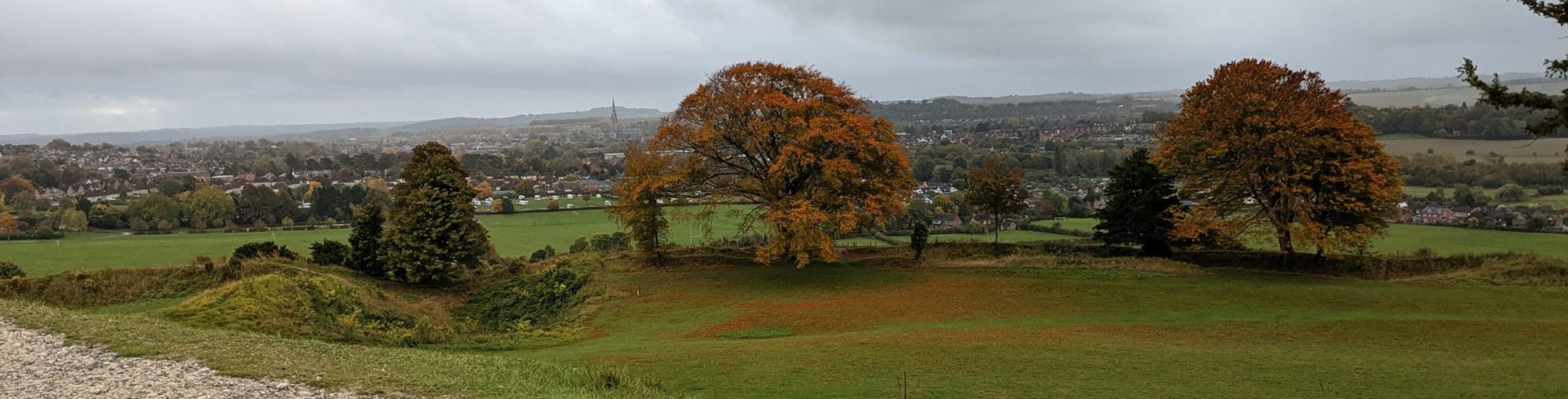
Today’s trip was to take us south and then west of Salisbury into the beautiful rolling hills and woodlands of Cranborne Chase. This designated AONB (Area Of Outstanding Natural Beauty – such a romantic name) covers an area of 380 square miles on the boundaries of Wiltshire, Dorset, Hampshire and Somerset. It is famous for its chalk downlands and chalk streams.
When you think about how near this area is to the south coast of the UK it is obvious that it will have been an attractive farming area to incomers from the earliest times. On our trip we are focussing on the evidence of the early farmers and early metalworkers from about 3800-2500BC. But there is also ample evidence of villas thriving in Roman times in the river valleys.
The old church at Breamore was our first destination. The church was probably founded by Ethelred the Unready around 1000 AD. Lots of schoolchildren have laughed about this name but it is actually a pun – Ethelred means ‘well advised’ and Unrede means ‘poorly advised’. I am not sure which epithet best described him in reality.
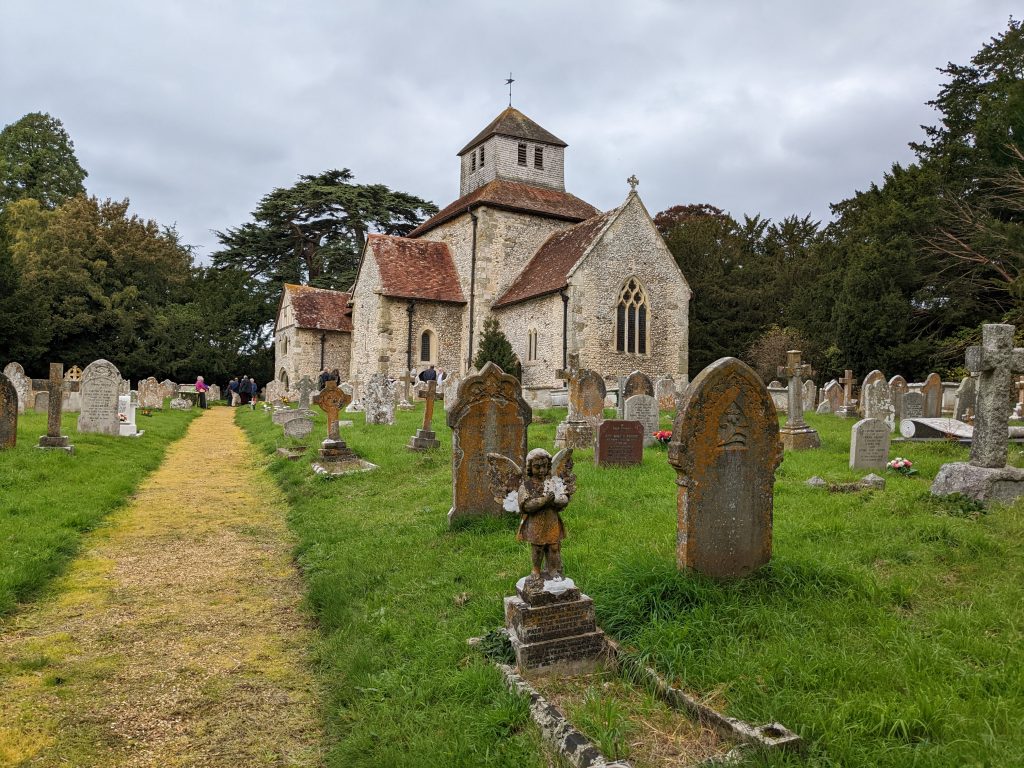
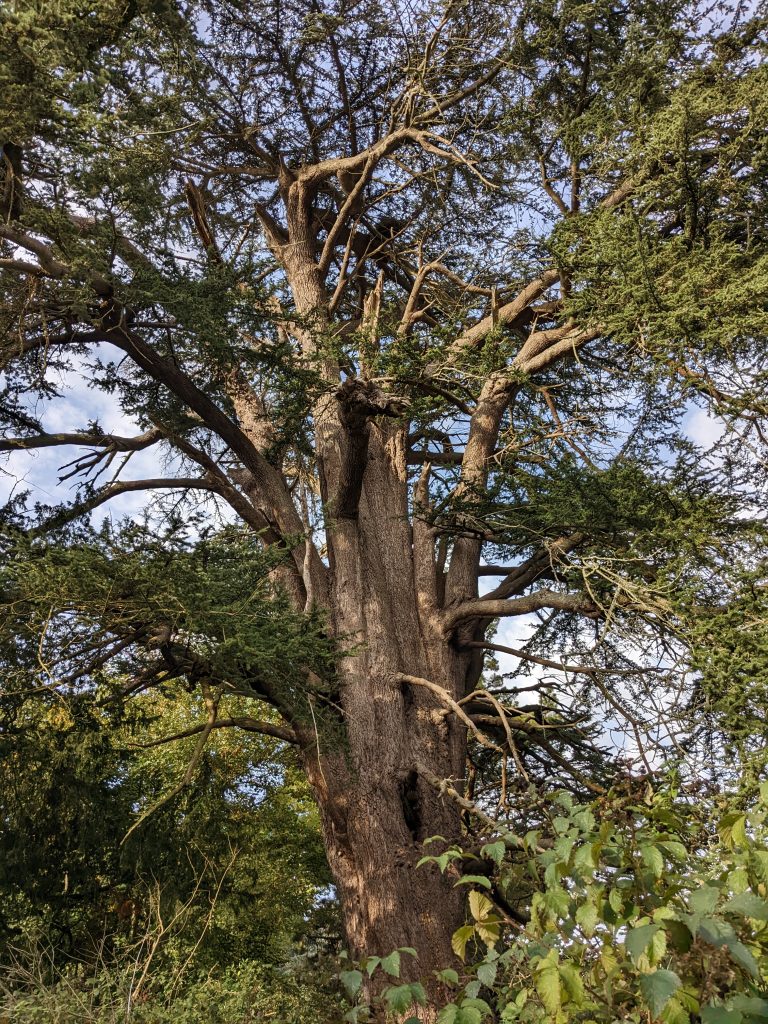
Anyway this ancient church has survived without much change because these days it is way off the beaten track. Back then it very likely served a royal estate, and there is local evidence that this estate had taken over the landholdings of an Anglo-Roman villa. The church was completely surrounded by some really ancient trees.
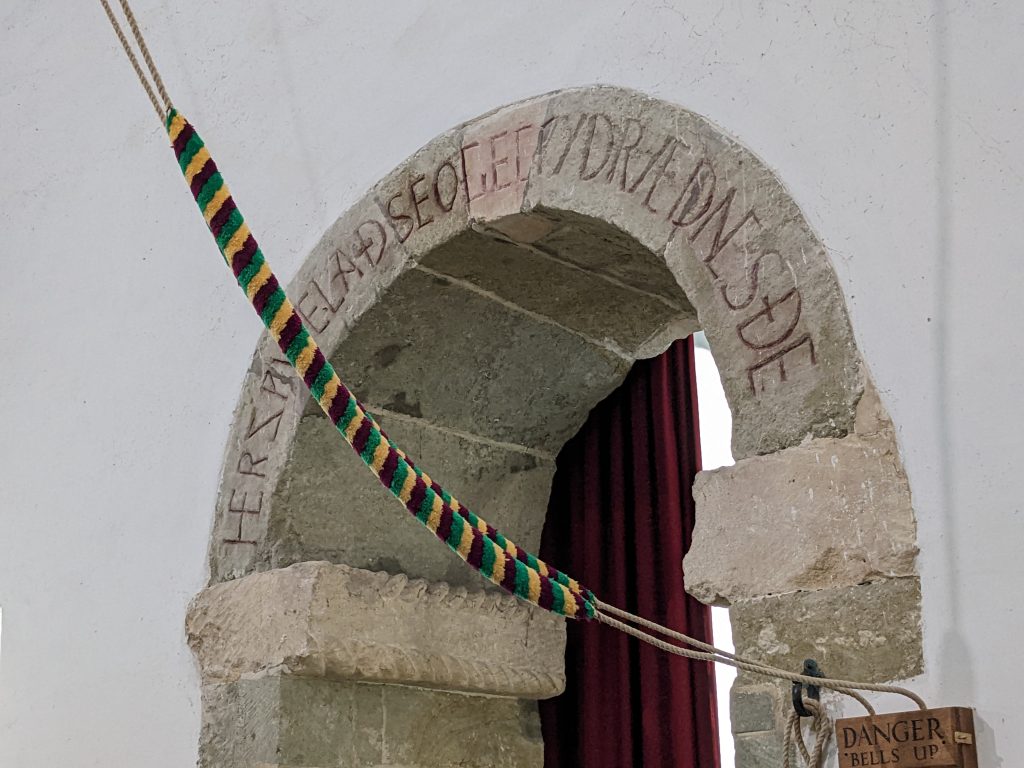
The shape of the building overall showed its early age, despite some later additions. There was a wonderful Anglo-Saxon inscription over one round headed entrance to a south porch. The letters read HER SWUTELATH SEO GECWYDRAEDNES THE, which loosely translates as ‘Here is manifested the word to thee’.
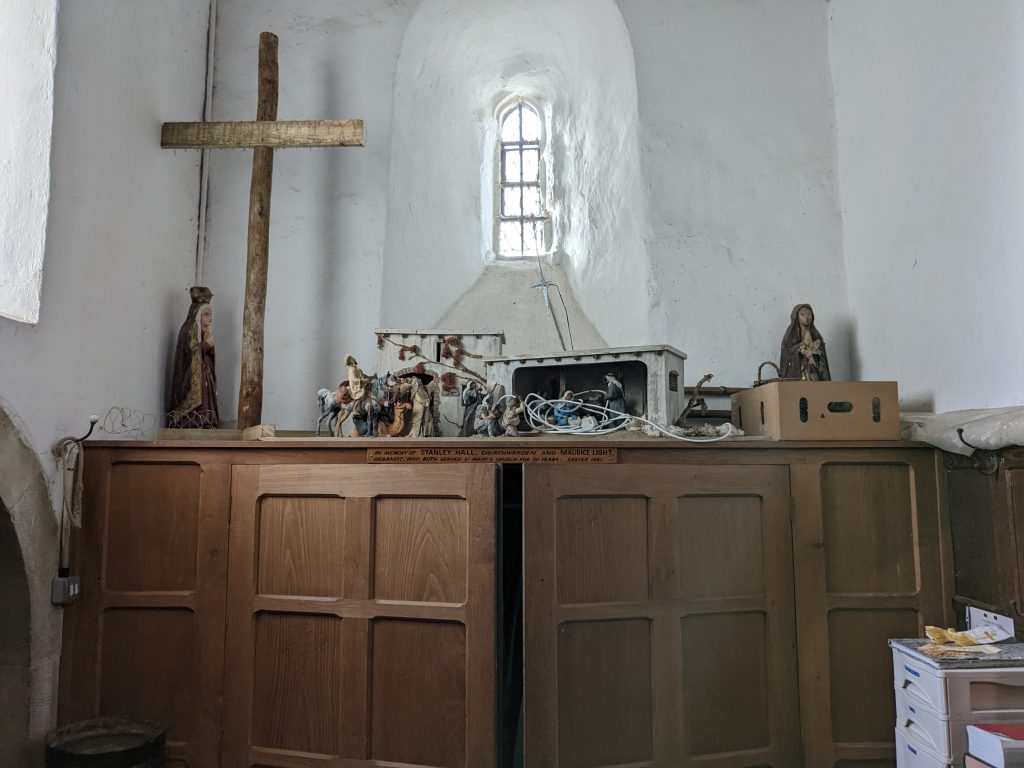
What I found inside the room was some lovely evidence of things just waiting for Christmas to come round again lit by this ancient window.
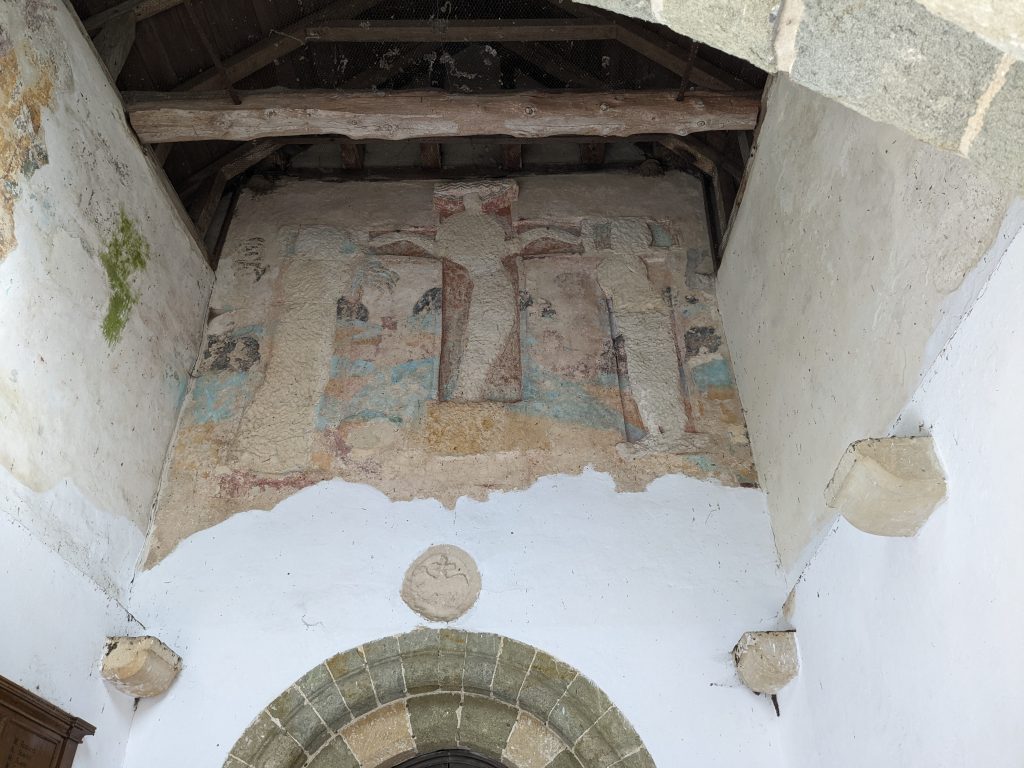
One striking feature is the now rather damaged wall carving in the main entrance porch. It also dates to 1000AD and is a Saxon rood (it means cross) or crucifixion scene. It would have originally been inside the church but was moved here later. The relief carving is nearly life-sized, and shows Jesus in obvious suffering on the Cross, apparently an unusual treatment of the scene at that time. The rood is surrounded by wall paintings showing a landscape. Part of the painting depicts the suicide of Judas, also not usually depicted.
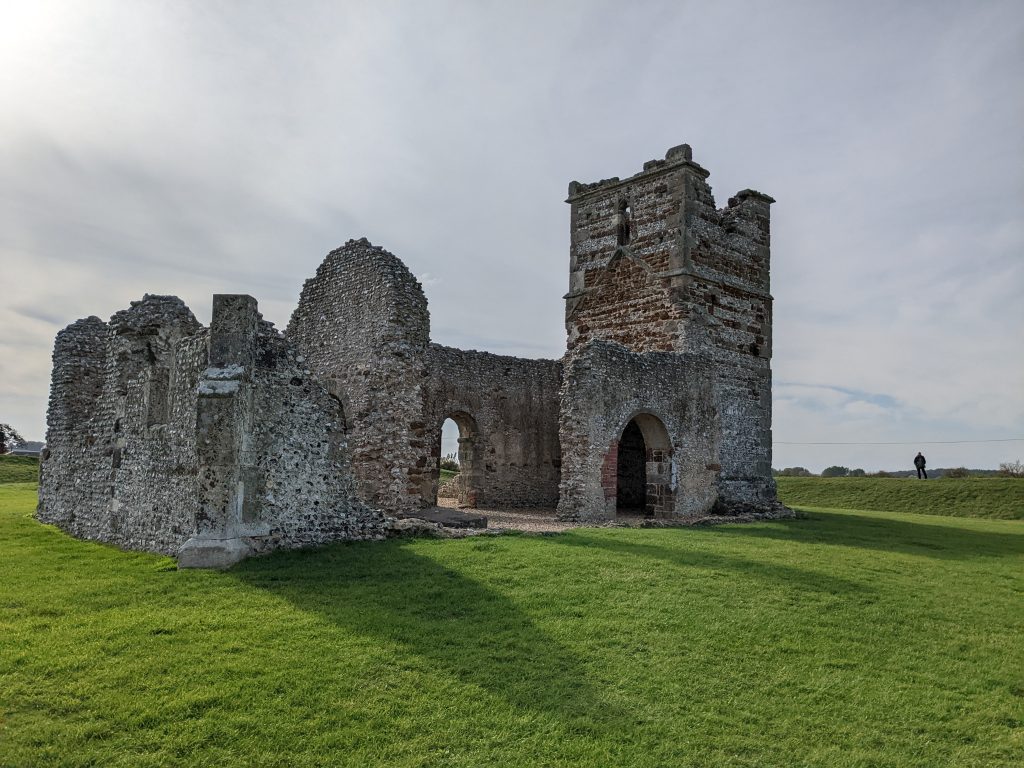
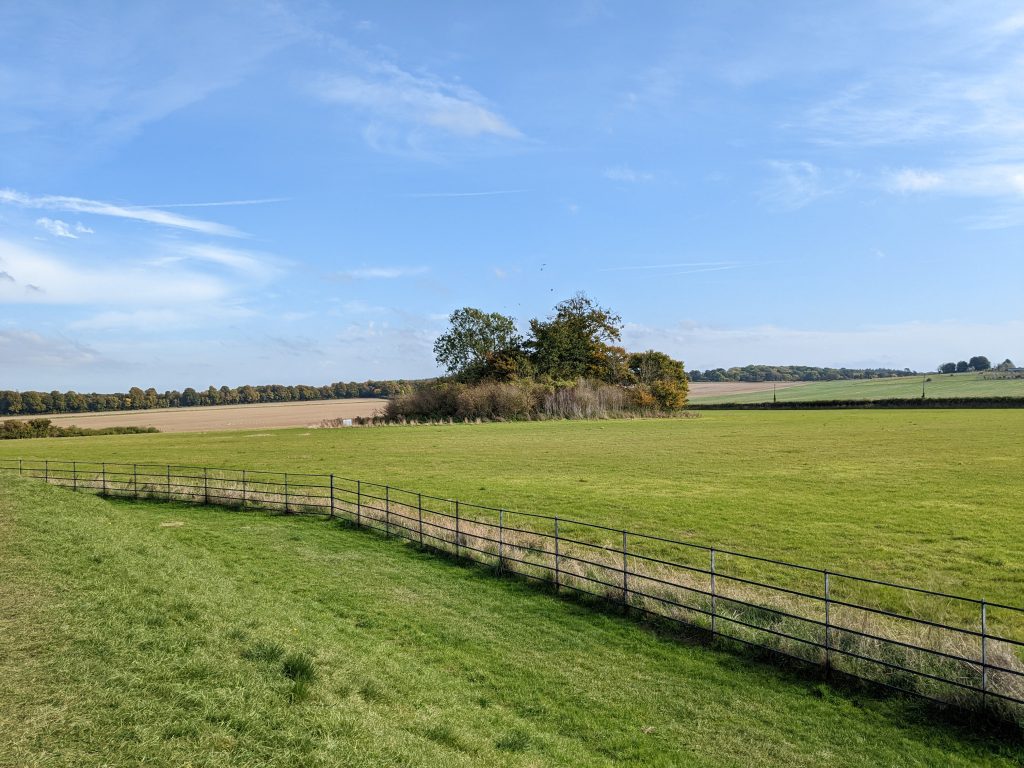
Travelling further westward now, we were headed for yet another Henge – Knowlton Henge. This has the added distinction of having a ruined church (about which not much is known) plonked determinedly in its centre. Lots of rumours about it being haunted apparently, but in a landscape with such old echoes that is not surprising.
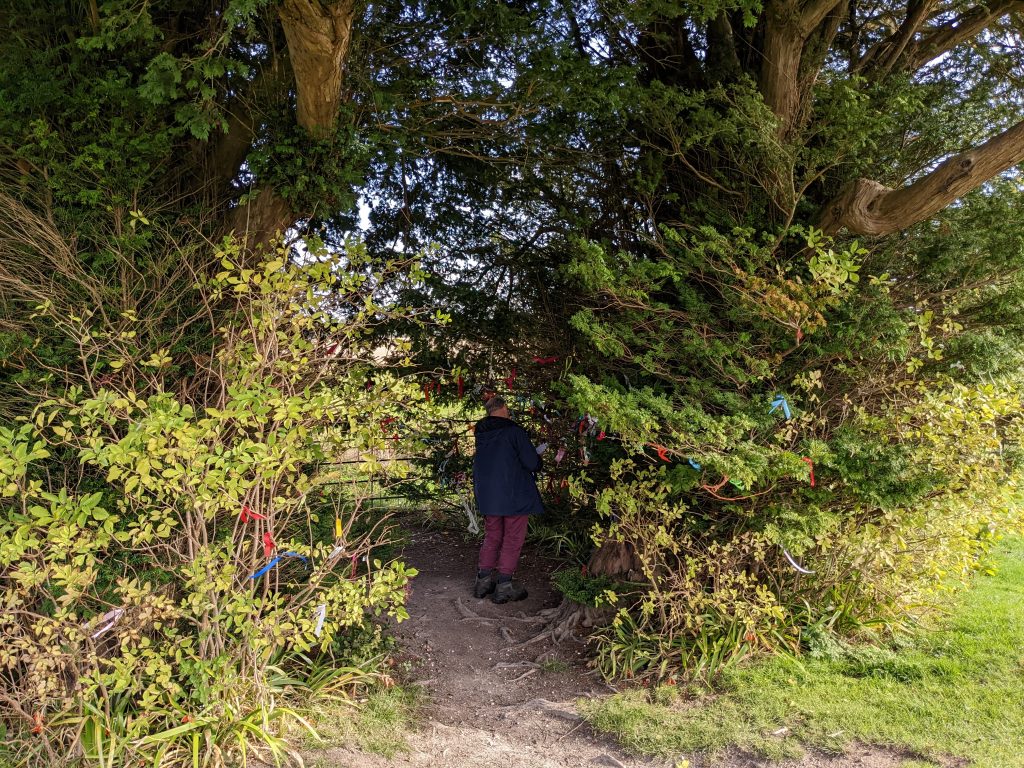
Further evidence of this came from a nearby tree which had been turned into a Wishing Tree.
In fact, there are the remains of several henges in this area – large ditched enclosures with a bank on the outside of the ditch – now lost under farmland and visible only as crop marks. They were in use for more than 1000 years. There is also the largest Bronze Age round barrow in Dorset which is apparently unexcavated. A line of ancient yews follows a trackway down to the River Allen. All very reminiscent of the other henges we have visited.
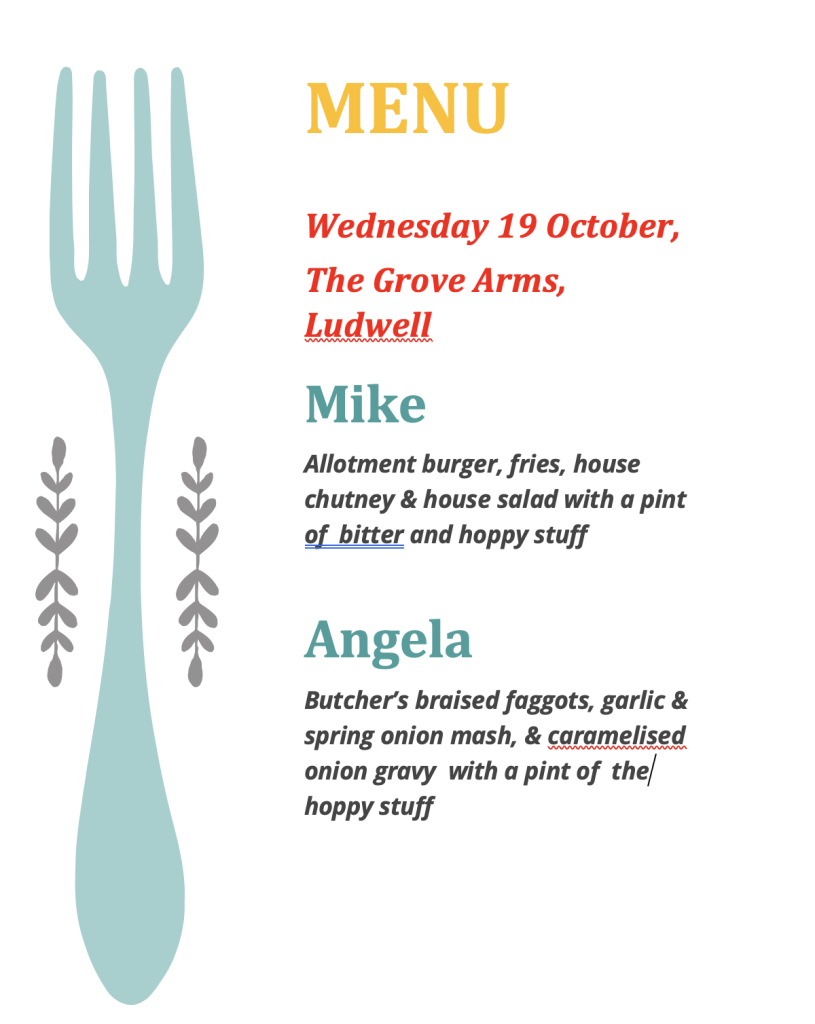
Time for lunch.
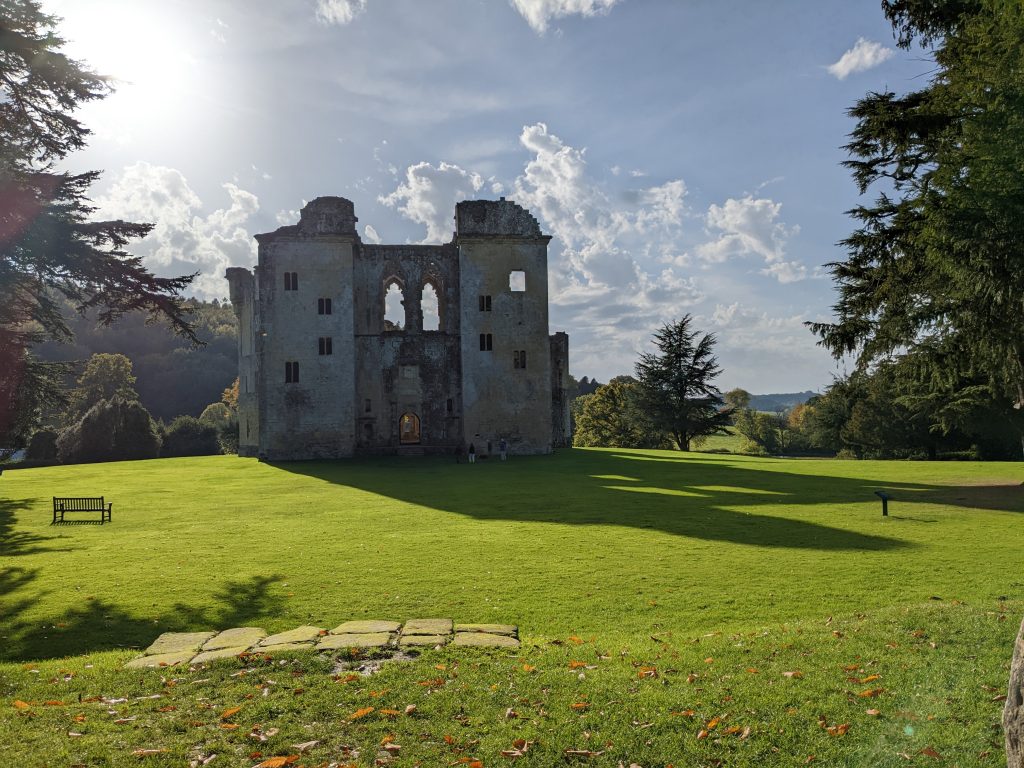
After lunch we had a 40 minute drive to the north through the AONB, looking at its absolute best in the late summer sunshine. Our destination was Old Wardour Castle.
It is traditional for the driver of a 48-seater coach to be challenged beyond human comprehension when using small country roads in the UK – this was Caerwyn’s finest hour. He had done his best to consult the map but as we approached one particular right-angled turn it seemed he would never make it through. But his reversing and positioning skills were superb and a spontaneous round of applause greeted his success. The staff at Old Wardour Castle subsequently confirmed that they didn’t get many coach trips these days – perhaps they should have said that on their website.
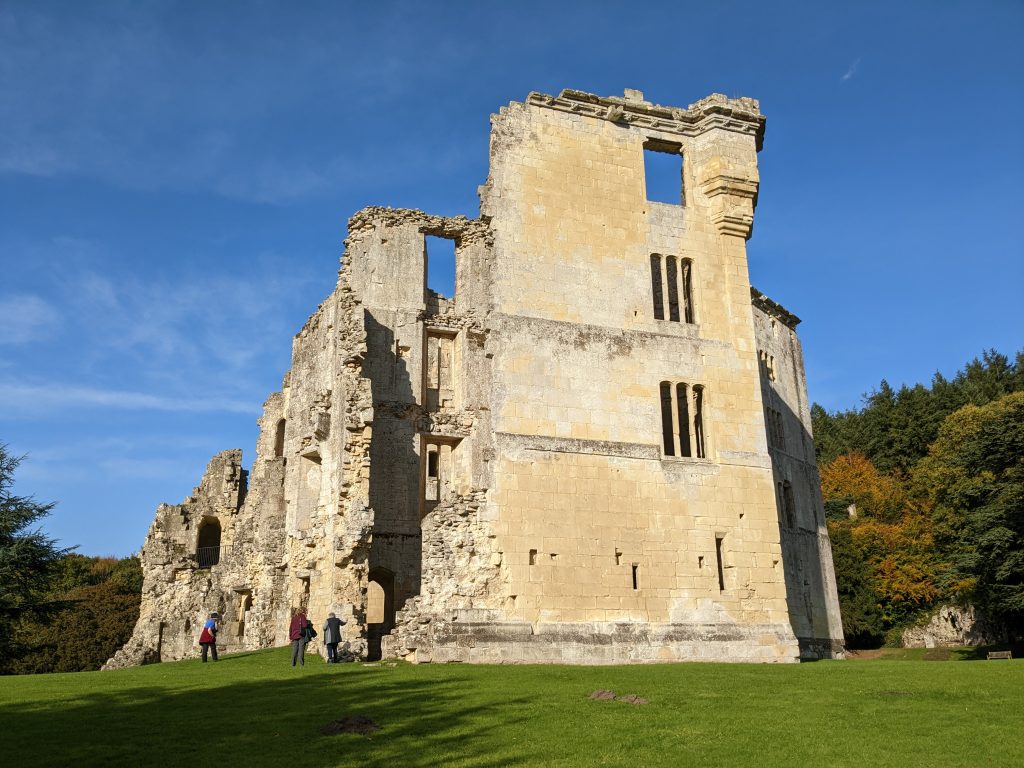
The castle itself which dates to 1385 was blown up by Parliamentarians attempting to regain it from Royalists in 1644 during the Civil War. It was left as a romantic ruin, much in vogue in later centuries. It was the setting for an early scene in the Kevin Costner movie ‘Robin Hood Prince of Thieves’. Today we had it pretty much to ourselves.
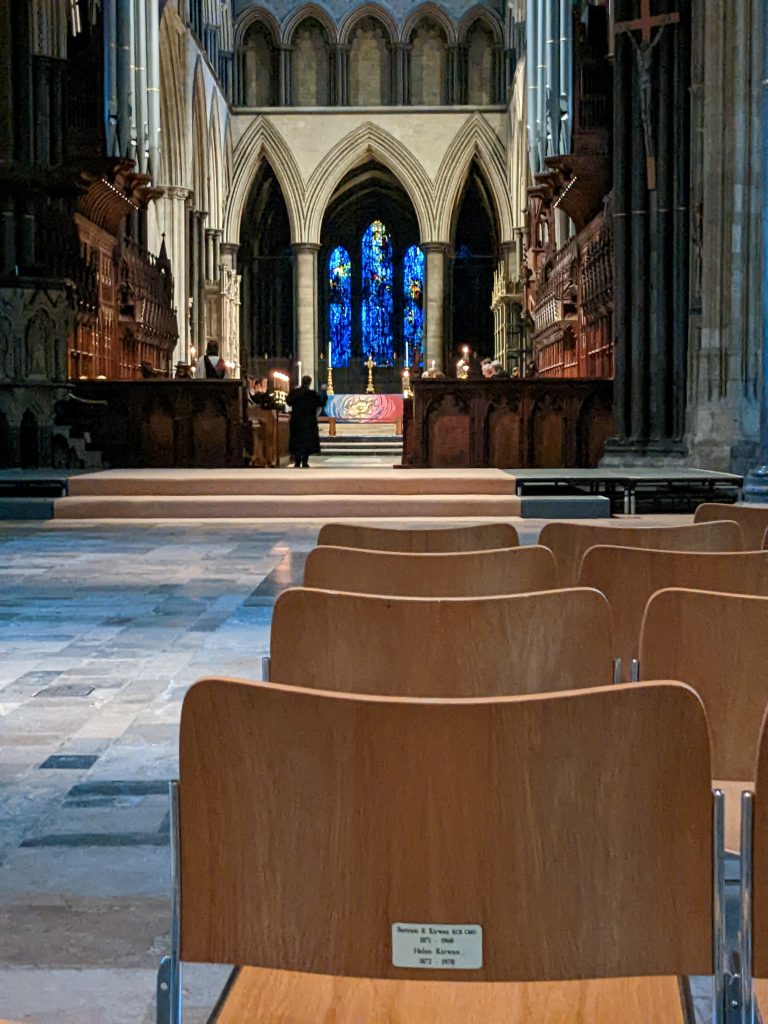
Another lovely drive through the late afternoon returned us to Salisbury just before 5pm. This gave me a chance to go and enjoy choral evensong at the cathedral again. With the only other people there being parents waiting to collect their kids from the choir. What a very great treat.